

Indra establishes the industrial core hat will develop the spanish counter-battery system, one of the most advanced in Europe
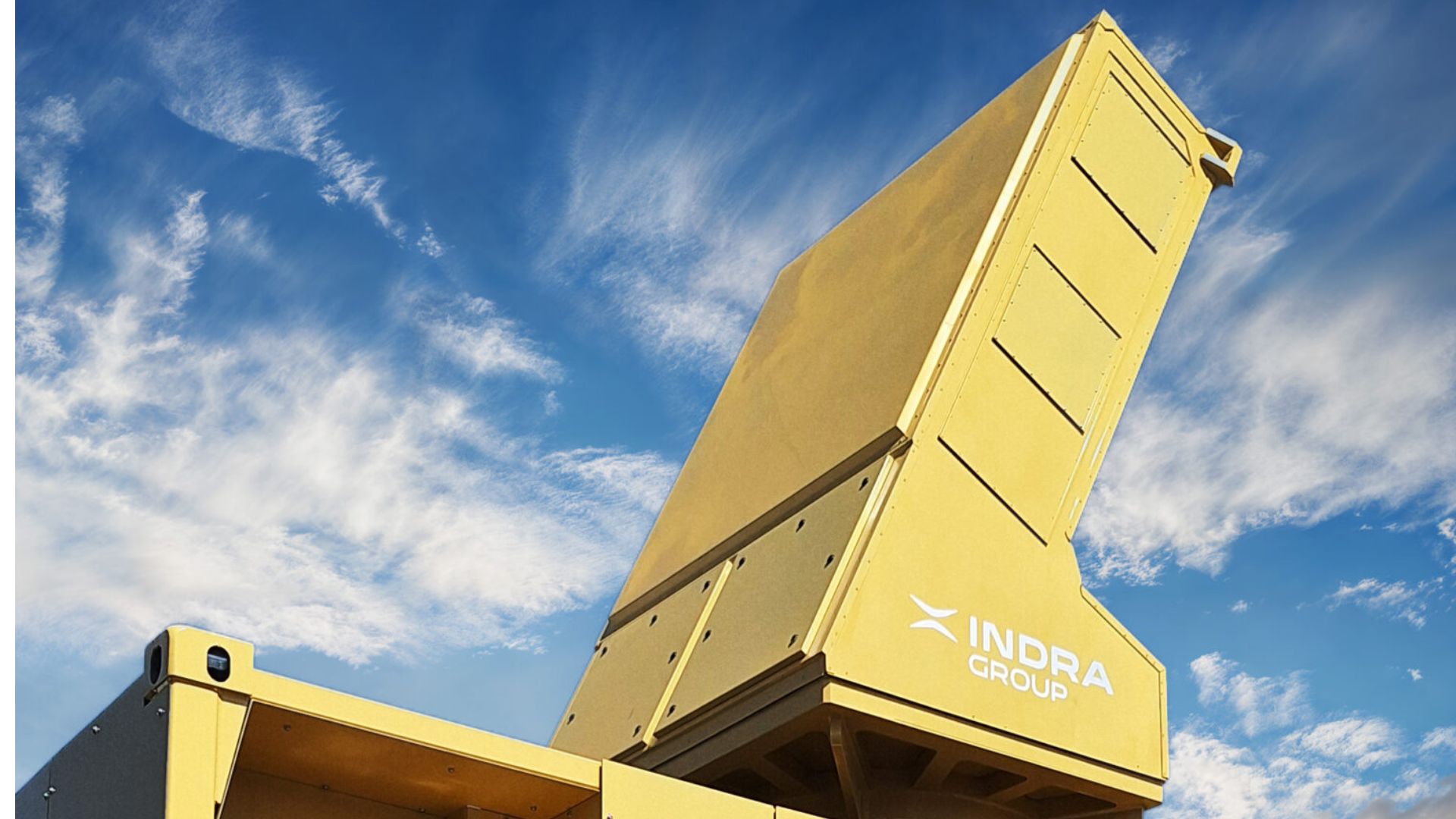
The company brings GMV, Nord Motorreductores and SMEs such as Niasa, Teyde 2010 and AC Precisión into the Special Modernization Program that will develop a cutting-edge radar equipped with the most advanced electronic scanning technology (Full AESA).
Its development will take place in factories, research centers and universities across much of the national territory, contributing to the creation of high-quality employment in different regions.
The new system will enable the Armed Forces to detect with great precision and speed the origin of indirect fire (artillery, mortars or rockets) in order to counter it.
Indra has begun work on the future Spanish radar for locating the origin of indirect fire (RALOFI), within the framework of a Special Modernization Program (PEM). To this end, it has established an industrial core made up of GMV, Nord Motorreductores and SMEs such as Niasa, Teyde 2010 and AC Precisión. All of them will play a key role in the development of this state-of-the-art, world-class technology, which will provide the Armed Forces with a critical capability for operating in high-intensity conflicts.
Thanks to the ambitious industrial plan defined by Indra for this program, the design, development and manufacturing of the radar will be carried out entirely in Spain, achieving a participation of more than 80% by national companies. Most of these are SMEs, such as the electromechanics company Niasa, the engineering firm Teyde 2010, and AC Precisión, a company specialized in air conditioning for data centers and industrial facilities.
Miguel Rodríguez Mora, Director of Indra’s Land Systems business unit, stated: “The objective is to strengthen the defense industrial base and incorporate into these programs any company with technological capabilities that may be of interest, regardless of its previous experience in the defense sector.” He explained that “the aim is to reduce excessive dependence on third countries and gain technological sovereignty over the systems developed.”
Efforts have also been made to distribute activity throughout the national territory. In this regard, engineering and systems integration work will be carried out in Madrid; the development of advanced sensors and technologies based on gallium nitride (GaN) will be undertaken in Vigo; in Córdoba, the creation of an industrial hub specialized in radars will be promoted, helping to energize the local productive fabric with the support of the University; and from the Basque Country, Aragon and Catalonia, the production of mechanical and electromechanical subassemblies will be carried out.
Indra thus exercises its role as a driving company, facilitating the cohesion of the industrial fabric for better use of capabilities and improved coordination, enabling an optimal response to the needs of the Armed Forces and successful competition in the international market.
The project will generate high-quality employment in engineering, advanced electronics, software, precision manufacturing and systems integration, also involving vocational training profiles and highly specialized professionals.
Multifunction Capability
The development of this radar is key for the Spanish Army. It is a next-generation system with a full active electronically scanned array (Full AESA) architecture, employing gallium nitride (GaN) semiconductor technology and software-defined radio (SDR) communications. This combination of the most advanced technologies provides greater range and precision in the detection of indirect fire (artillery, mortars or rockets), high resistance to electronic interference, and simple digital reconfiguration depending on the mission.
In this way, the Armed Forces will have a solution offering high availability, easy maintenance and great operational flexibility, designed for virtually immediate deployment and redeployment.
Experience in recent conflicts, such as Ukraine, has shown that early detection and counter-battery capabilities are decisive factors in modern scenarios. However, this system will go further by enabling highly automated operation, minimizing personnel workload, and being fully integrated into command and control networks. The system can also be used for ground surveillance, protection of forward operating bases, and coastal naval surveillance. As a result, the Armed Forces will have a solution of enormous value to support virtually any mission in which they are involved.