

Indra showcases new capabilities for aircraft sustainment, in-flight 5G connectivity, pilot–fighter interaction and counter‑drone defence at BACSI 2026
The company is participating in four of the five areas of the Connected, Sustainable and Smart Air Base (BACSI) 2026 exercise, presenting decisive solutions for the transformation of air bases.
It will showcase its mixed-reality-based remote sustainment system, a pioneering in flight 5G data transmission system, and how it is applying neurotechnology to enable new modes of pilot–fighter interaction, as well as new capabilities to counter drones
The company is also conducting a demonstration of its NIMBUS combat cloud, a key technology for future operations and whose development it is leading in Europe
Indra is presenting at the BACSI 2026 Exercise —scheduled for 18 and 19 March at the Albacete Air Logistics Centre as part of the Connected, Sustainable and Smart Air Base programme— four use cases featuring cutting-edge systems for the sustainment of aerial platforms, in‑flight 5G connectivity, new modes of pilot–fighter interaction and enhanced counter‑drone capabilities. In addition, the company will demonstrate its NIMBUS combat cloud, a revolutionary technology that will radically change the way air forces operate and will be decisive for achieving true multi‑domain capabilities.
Of the five areas defined in the BACSI exercise organised by the Spanish Air and Space Force, Indra is contributing key solutions to four of them: digitalised maintenance, 5G connectivity applied to aircraft, advanced pilot–aircraft interaction systems and counter‑drone defence systems.
Aircraft sustainment: mixed‑reality remote assistance
In the field of sustainment, Indra will showcase its remote assistance system based on mixed‑reality goggles (holographic glasses). This system is designed to enable operators and mechanics to connect with remote experts, share real‑time video and receive guidance or annotations during interventions. Tools of this kind are particularly useful in international missions, where immediate access to specialists may be limited.
The system is aligned with the PERAM framework, which serves as the regulatory standard for military aircraft maintenance and is comparable to EASA regulations in civil aviation. This alignment ensures adherence to the safety and certification requirements that are characteristic of such operations.
The aircraft as a node in the logistics ecosystem
Another capability Indra will be presenting at BACSI is the application of 5G connectivity to aerial platforms, with a particular focus on transmitting maintenance data during flight. This pioneering functionality enables technical information to be sent to ground crews before landing, streamlining resource preparation and improving logistical decision‑making.
To achieve this, a C101 aircraft has been fitted with antennas and an onboard modem developed by Indra. Ground tests using satellite connectivity have been successfully completed, and in‑flight trials are planned. The solution combines 5G network connectivity with satellite communications, allowing for the transmission of logistics or platform‑status data during operations.
These capabilities pave the way for more efficient aircraft sustainment management by integrating the aircraft into the logistics cycle in near‑real time. This is state‑of‑the‑art technology that positions Indra at the forefront, leading its development globally.
Fighter aircraft and neurotechnology
BACSI 2026 will also serve as a platform to showcase advances in physiological monitoring and multimodal cockpit interaction. Indra is working on integrating biometric sensors, eye‑tracking systems and interaction technologies that make it possible to analyse variables related to cognitive load and pilot status during the mission.
A flight simulation cockpit will be displayed at the stand to demonstrate this proof of concept. These technologies aim to explore new forms of interaction between pilots and onboard systems, capable of adapting to the operational context and contributing to more efficient information management in complex missions.
Counter‑drone defence with an integrated view of airspace
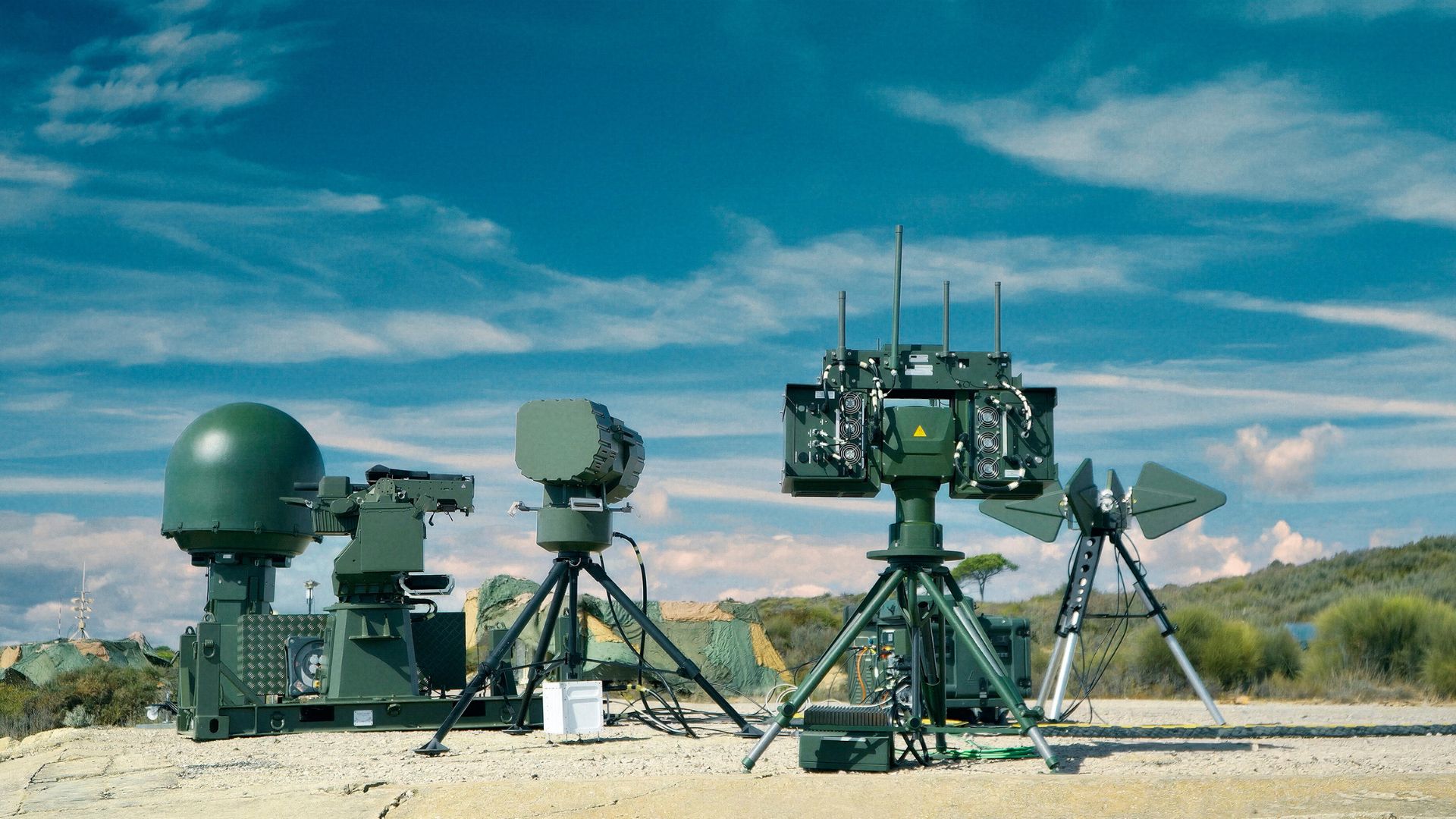
In the field of drone defence, Indra is participating in a use case developed jointly with the Spanish Air and Space Force that integrates its C‑UAS CROW system with crewed (ATM) and uncrewed (UTM) air traffic management information.
A command-and-control post has been deployed during the exercises, combining data from Indra’s counter‑drone system sensors with air traffic information managed by ENAIRE through U‑space services. This integration provides a unified picture of crewed and uncrewed traffic within the airport environment.
This capability makes it possible to distinguish authorised flights from potential threats, reduce false alarms and improve coordination of the response to drone‑related incidents. The exercise features different operational scenarios with cooperative and non‑cooperative uncrewed aircraft, as well as participation from the State Law Enforcement Forces. Additional associated capabilities, such as the Nemus radar and the SmartEar V3 RF sensor, will also be showcased during BACSI.
Combat cloud for multi‑domain operations
In addition to the defined use cases, Indra will conduct a demonstration of its combat cloud based on NIMBUS nodes—a technology already tested in several pioneering flights in Europe and presented to the Spanish Air and Space Force as part of the experimental and validation capabilities Indra maintains in Galicia.
This combat cloud architecture enables sensors, platforms and decision centres to be connected within a common network that facilitates secure real‑time exchange of operational information and far more advanced and precise decision‑making. Solutions of this kind are essential for multi‑domain operations and for the development of future next‑generation air systems.
Indra has become a pioneer in developing this system in Europe and globally. This technology will, in the coming years, completely transform military aviation, the way fighter aircraft operate and the role of the pilot.