

Indra and EM&E’s ARACNE system integrates into spain’s air defence during ATLAS 26 to counter drone saturation attacks
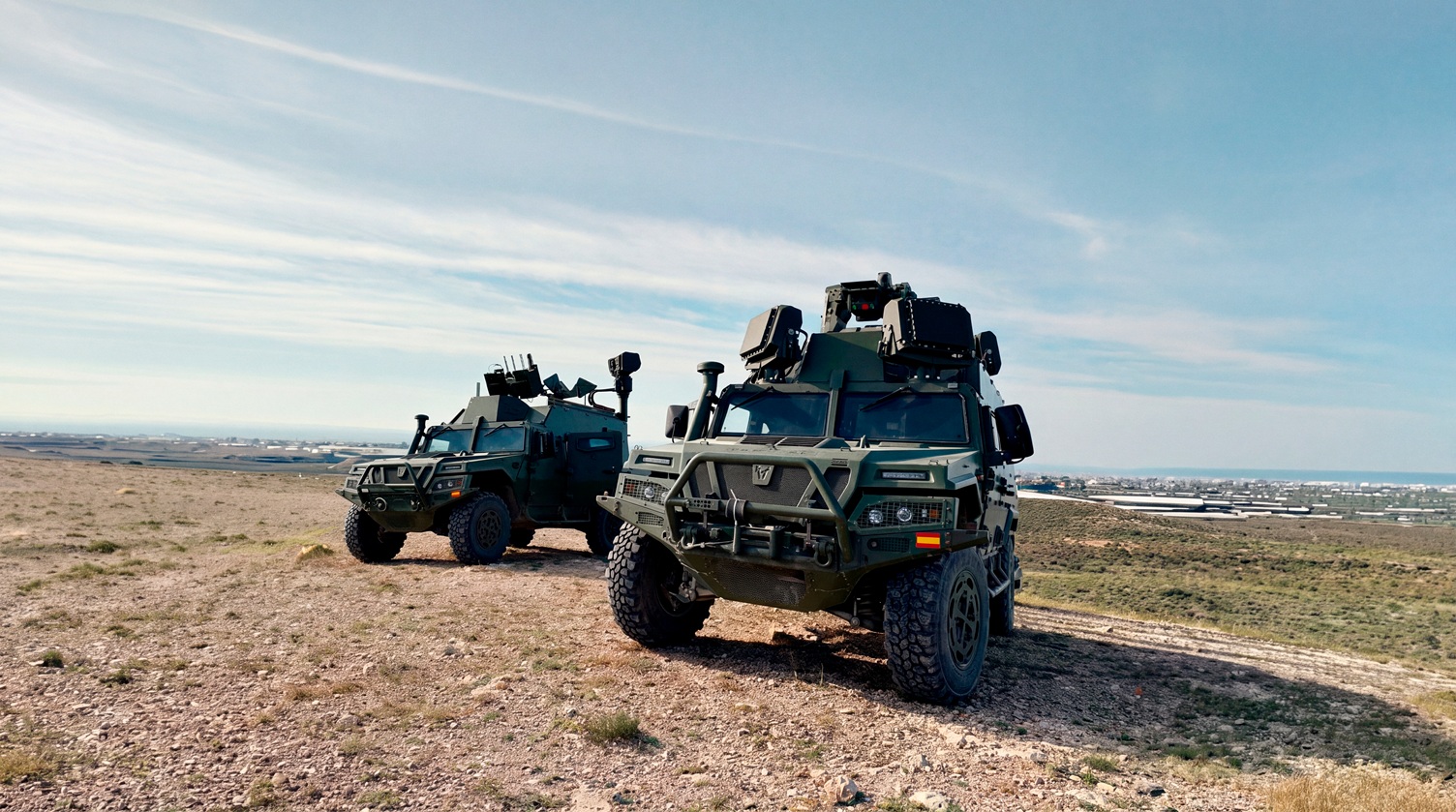
Indra and EM&E’s C-UAS solution provides multilayer protection and on-the-move capability against drones and saturation attacks
Integrating these systems into an integrated air defence architecture is one of Europe’s major challenges, an area in which Spain brings extensive experience and leadership
The ARACNE counter-drone system, developed by Indra and EM&E and in service with the Spanish Armed Forces, demonstrated its ability to integrate operationally into Spain’s air defence architecture during the ATLAS 26 exercises, held in Huelva from 19 to 23 October. This marks an important milestone for national defence and NATO, incorporating counter-drone capabilities into the joint response needed to counter unmanned aircraft, drone swarms and saturation attacks through coordinated action aligned with the wider air defence system.
ARACNE was integrated into the Spanish Aerospace Operational Command’s (AOC) air defence system through the COAAAS+ Anti-Aircraft Artillery Operations Centre, also developed by Indra. This enabled effective coordination between C-UAS systems and anti-aircraft artillery. From an operational standpoint, this architecture generates a common operational picture, shortens the decision-making cycle and accelerates threat detection, identification, classification and prioritisation. It also facilitates the assignment of the most appropriate sensor and effector according to the target’s nature and trajectory, the level of risk and the rules of engagement. The result is a coordinated, scalable response providing multilayer protection, avoiding duplication, optimising resources and responding more effectively to large-scale attacks.
This trial marks an important step towards addressing one of the challenges Europe currently faces in protecting its airspace against emerging threats, which requires the seamless integration of a large number of systems, sensors and effectors. This is an area in which Spain brings extensive experience and leadership to initiatives such as building a drone wall on the eastern flank and protecting borders.
Another of ARACNE’s distinguishing capabilities is its on-the-move protection. Thanks to Indra’s NEMUS radars, the system can accompany units during manoeuvres, extend coverage to moving formations and reduce their vulnerability to UAS without relying solely on fixed sites. This mobility protects command posts, logistics units, convoys and combat elements, helping to preserve freedom of action, the tempo of manoeuvre and operational continuity. The command-and-control system (C4ARMS) integrates the various sensors and effectors with higher air defence echelons, enabling the response to be adapted to the mission and tactical environment. This is complemented by the Brontes jammer, which provides powerful jamming capabilities against UAS threats.
EM&E's OTEOS electro-optical sensor provides precise identification and tracking, while the GUARDIAN remote weapon stations deliver neutralisation capabilities against different types of drones. Their integrated operation maintains target traceability, improves decision-making and enables a proportionate response to each threat. Bringing this capability into service in just two years reflects Indra and EM&E’s firm commitment to collective defence and the operational needs of the Spanish Armed Forces. Both companies thereby reaffirm their commitment to providing them with the most technologically advanced systems, developed to respond effectively, rapidly and autonomously to current and future threats.
ATLAS 26 brought together units from the Armed Forces and law enforcement agencies under a single command and validated joint procedures against Class I and II UAS in demanding scenarios. In this context, ARACNE demonstrated that C-UAS defence delivers its greatest value when it forms part of an integrated architecture, shares information and operates in coordination with other capabilities. Its participation confirms the solution’s operational maturity, interoperability, flexibility and open architecture, as well as its direct contribution to force protection and the protection of critical infrastructure. ARACNE is establishing itself as a national capability ready to respond to emerging airborne threats and strengthen an integrated, flexible air defence adapted to the operational environment.