

Indra demonstrates the potential of the combat cloud in the naval domain for the first time in Europe during NATO’s REPMUS 2026 exercise
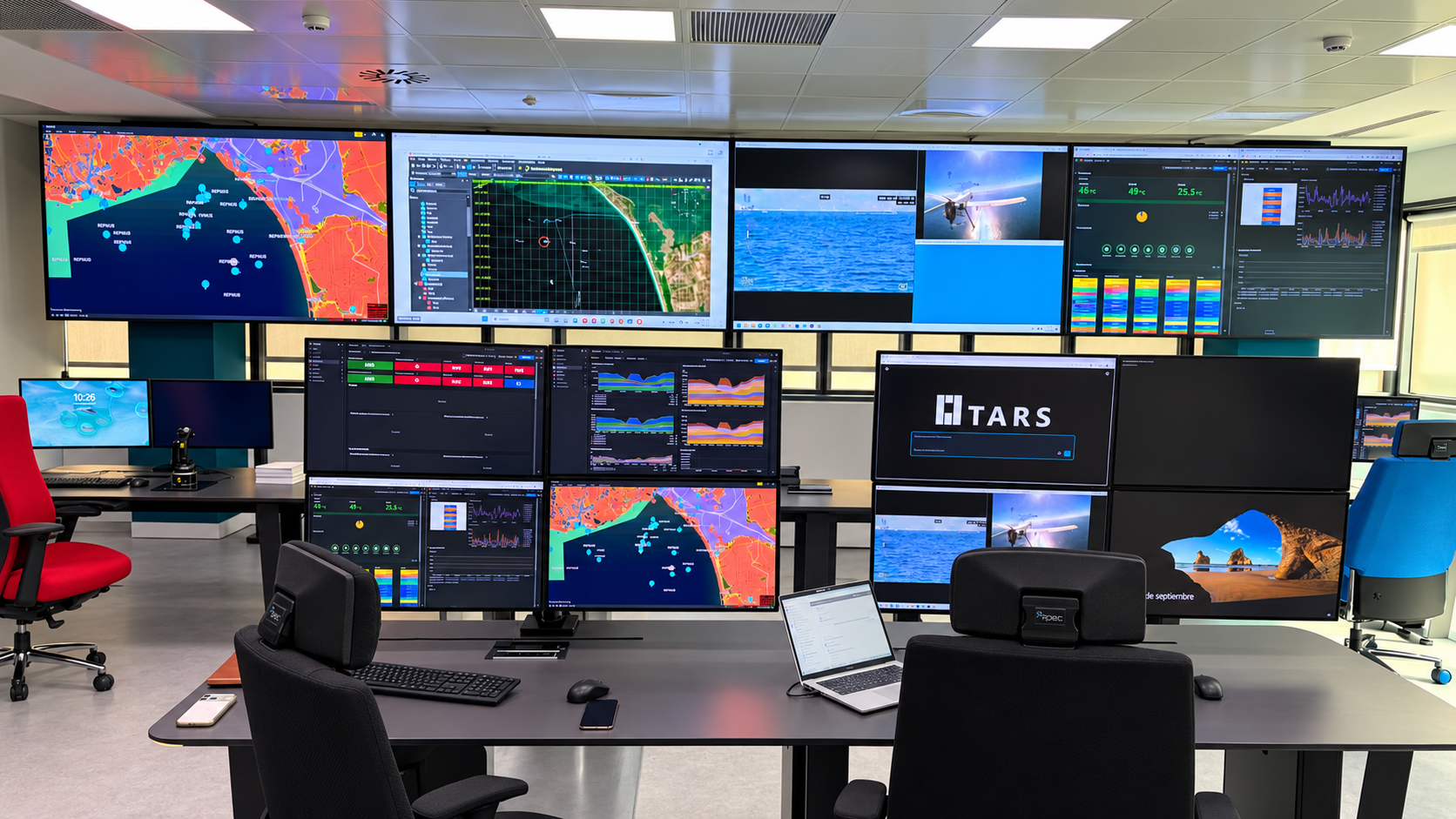
Indra has developed one of the key elements of the Naval Combat Cloud. Indra’s NIMBUS solution connected manned and unmanned air and naval platforms, sensors, command posts and information systems in a single shared digital environment
The systems integrated into NIMBUS included the TARSIS unmanned aerial system, which provided surveillance, reconnaissance and intelligence capabilities and strengthened cloud connectivity, as well as lightweight electronic warfare systems
With this demonstration, Indra is progressing in the operational validation of next-generation sovereign technologies for the Spanish Navy and strengthening its leadership as a pioneering defence systems company
As part of NATO’s REPMUS 2026 exercise, organised in Portugal by the Portuguese Navy, Indra, with the support of the Spanish Navy, carried out an initial proof of concept of its NIMBUS combat cloud solution in the naval domain, thereby contributing to the development of the Naval Combat Cloud, an operational capability that the Spanish Navy will develop over the coming years. Under the coordination and with the support of the Spanish Navy, Indra deployed a demonstrator of the NIMBUS solution in the naval operational experimentation environment provided by the exercise.
With this demonstration, Indra positions itself as a pioneering company in the development and maturation of one of the most important technologies for providing navies worldwide with genuine multi-domain and collaborative combat capabilities, which will be key to maintaining their superiority in increasingly complex operational scenarios over the coming years.
In coordination with the Spanish Navy, Indra connected manned and unmanned naval and air platforms, sensors, command posts and information systems distributed across Spain and Portugal in a single shared digital environment.
The deployment included assets from the Spanish Navy, Indra and other industry players, such as Spain’s Utek. The deployed units were able to share information and services through NIMBUS, accelerating decision-making cycles and strengthening mission resilience and continuity.
The solution demonstrated the advantages this technology provides in scenarios characterised by high mobility and geographical dispersion, as well as its resilience in degraded, limited or intermittent communications environments.
TARSIS extends surveillance and communications capabilities
Among the systems connected to NIMBUS, the TARSIS unmanned aerial system played a prominent role in a coordinated search and rescue exercise. Tasks assigned through the combat cloud involved locating vessels in open waters using visual and infrared sensors, identifying the target and reporting its position for rescue.
In addition, during this year’s exercise, the TARSIS system validated its interoperability capability (STANAG 4817), which enables integration and information exchange with allied systems, a key capability in joint missions.
The company also tested lightweight electronic warfare capabilities, specifically its Manpack system, designed for deployment on unmanned vessels, which can approach areas of interest to detect, analyse and identify radar-band emissions.
It also deployed its SIGINT 5G system, adapted for use on different types of unmanned vehicles, which enables the collection and exploitation of intelligence from next-generation communications networks.
With this demonstration, Indra is progressing in the operational validation of next-generation sovereign technologies for the Spanish Navy and strengthening its national and European leadership in combat cloud and collaborative combat capabilities. REPMUS (Robotic Experimentation and Prototyping with Maritime Unmanned Systems) is the largest international exercise dedicated to the experimentation and operational validation of unmanned systems and disruptive technologies in the naval domain. The exercise brought together armed forces, research centres, universities and technology companies from numerous countries, as well as organisations including the European Defence Agency and NATO itself, with the aim of accelerating the introduction of innovative capabilities into the operational environment.