

Indra strengthens the Spanish Armed Forces’ strategic autonomy with the development of the first tactical drones designed and manufactured in Spain
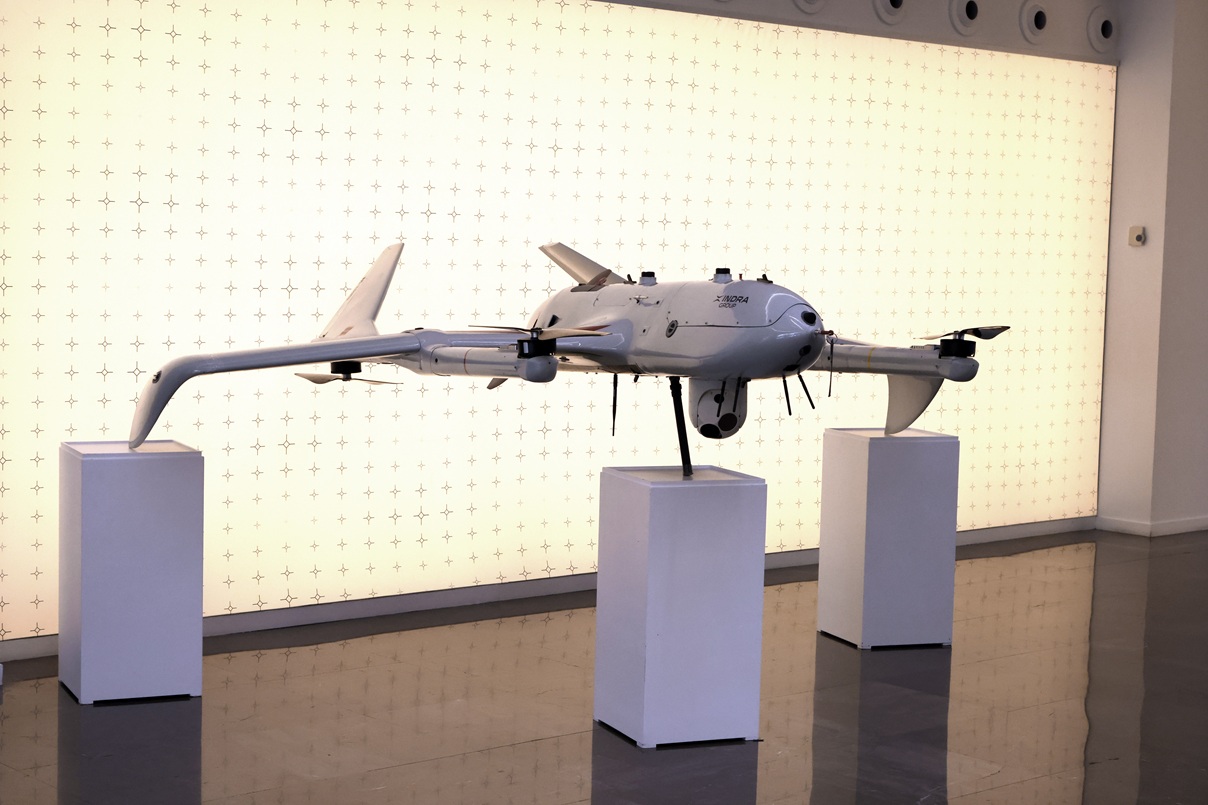
The Spanish Armed Forces Special Modernization Program for the Medium-Range Unmanned Aerial System (SANTAM) will enable the evolution and manufacture of two configurations of Class I (150 kg) unmanned aerial systems based on Spanish technology
The company will deliver a total of 147 remotely piloted aircraft to the Army, the Air and Space Force and the Navy, consolidating its position as a leading player in autonomous aerial systems, with an industrial network distributed across Andalusia, Castile and León, Madrid and Catalonia
The associated industrial plan foresees the participation of around a dozen companies, two research centers and universities, also drawing on vocational training centers specialized in aeronautical mechanics and assembly
Indra will drive the development and manufacture in Spain of a new generation of military tactical drones within the framework of the Spanish Armed Forces Special Modernization Program for the Medium-Range Unmanned Aerial System (SANTAM). Under this program, 147 Class I (150 kg) remotely piloted aircraft —making up a total of 49 systems— will be delivered, while new national industrial and technological capabilities critical to defense will be launched.
Within the program, which will involve the participation of around a dozen national companies, as well as two universities and research centers, two complementary high-performance platforms will be evolved. On the one hand, the Tarsis-W, a fixed-wing system with conventional takeoff and landing designed for tactical missions requiring greater endurance and range, with the ability to carry light weapons; on the other, the Tarsis-VTOL, also a fixed-wing system with vertical takeoff and landing, designed for agile operations and environments with logistical constraints. Both platforms have a wingspan of approximately 6 meters, a maximum takeoff weight of 150 kg, a flight ceiling of 15,000 feet or 4.57 km, an endurance of around 10 hours and a communications link range of more than 120 km, with the ability to transfer aircraft control and distribute mission management among several people.
Both systems, to be delivered between 2028 and 2030, will share a common technological architecture and a highly nationalized supply chain, strengthening Spain’s strategic autonomy in an area considered critical for defense.
Technological leap forward
The qualitative leap that Indra and the national industry will make with this program will be highly significant, advancing the nationalization of key technologies for the manufacture of this type of aircraft, such as the navigation and control system, autopilot, communications, SAR radar, onboard electronics, electro-optical systems and propulsion.
Until now, these types of systems have depended mainly on international suppliers and, with this program, Spain will have a national industrial and technological base ready to evolve, maintain and adapt these platforms to the operational needs of the Armed Forces.
The new systems will provide advanced intelligence, surveillance, target acquisition and reconnaissance (ISTAR) capabilities, thanks to the integration of electro-optical, infrared and laser designation sensors (EO/IR/LD) and SAR radar, and will enable tactical operations with high mobility and rapid deployment.
In addition, the type certification of the platforms, required to manufacture these systems in series, will provide greater guarantees of safety, robustness and operational availability, facilitating their interoperability and potential future export to other allied and NATO countries.
Strengthened industrial base
The development of these systems will generate around 500 direct jobs over the next four years, approximately 100 within Indra and the rest across the company’s supply chain.
Industrial and engineering activity will be distributed among Indra’s specialized centers in Seville, Villadangos del Páramo (León), Valladolid, Madrid and Barcelona.
The work carried out at these centers will be complemented by the activity undertaken by the group’s partners in this program in other provinces across Spain, as well as by the work of the universities and research centers involved.
National defense and technology ecosystem
Indra is building around this program a nationwide industrial and technological value chain that will integrate engineering, production, electronics, simulation, communications and mission system capabilities.
The company is currently finalizing the industrial plan for the nationalization of the systems, with the estimated participation of around a dozen companies and two research centers, as well as universities and vocational training centers specialized in aeronautical mechanics and assembly. INTA will also play a key role in the platform certification processes.
The UAS-I program consolidates Indra position as a national integrator of advanced defense capabilities and as one of Europe’s leading players in autonomous systems and next-generation technologies.
The group thus reinforces its ability to lead complex defense programs, drive new strategic industrial capabilities and contribute to strengthening European technological autonomy in an international context marked by the accelerated transformation of security and defense scenarios.
New operational scenarios
The Tarsis family will cover an intermediate operational space between light drones and larger platforms, combining advanced capabilities with lower logistical requirements and a high degree of deployment agility.
Compared with smaller systems, these tactical UAS offer greater endurance, range and payload capacity to integrate advanced sensors, ISTAR capabilities, electronic intelligence systems and light weapons in certain operational configurations. Compared with larger platforms, they significantly reduce deployment requirements, infrastructure, logistical footprint and acquisition and operating costs. The program complements other capabilities already under development within the Spanish Armed Forces and responds to the growing relevance that these types of systems are acquiring in today’s operational scenarios.