

Indra unveils its new Squall cruise missile, the Drizzle effector, the Tarsis drone family, the Aracne counter-drone system and the COAAAS Air Defence system at the 2E+I Army 35 forum
The company is focusing on deployment-ready solutions available for immediate delivery and adapted to a new reality in which it is not enough to neutralise mass attacks effectively: this must also be done far more efficiently in order to erode the adversary’s economic capacity
The forum provides a showcase and public launch for several Special Modernisation Programmes in which Indra is involved, including the development of 147 Tarsis drones for the Spanish Armed Forces, the ARACNE counter-drone system and the COAAAS Anti-Aircraft Artillery Operations Centre
The company is providing the Spanish Army with cutting-edge solutions to strengthen its operational superiority
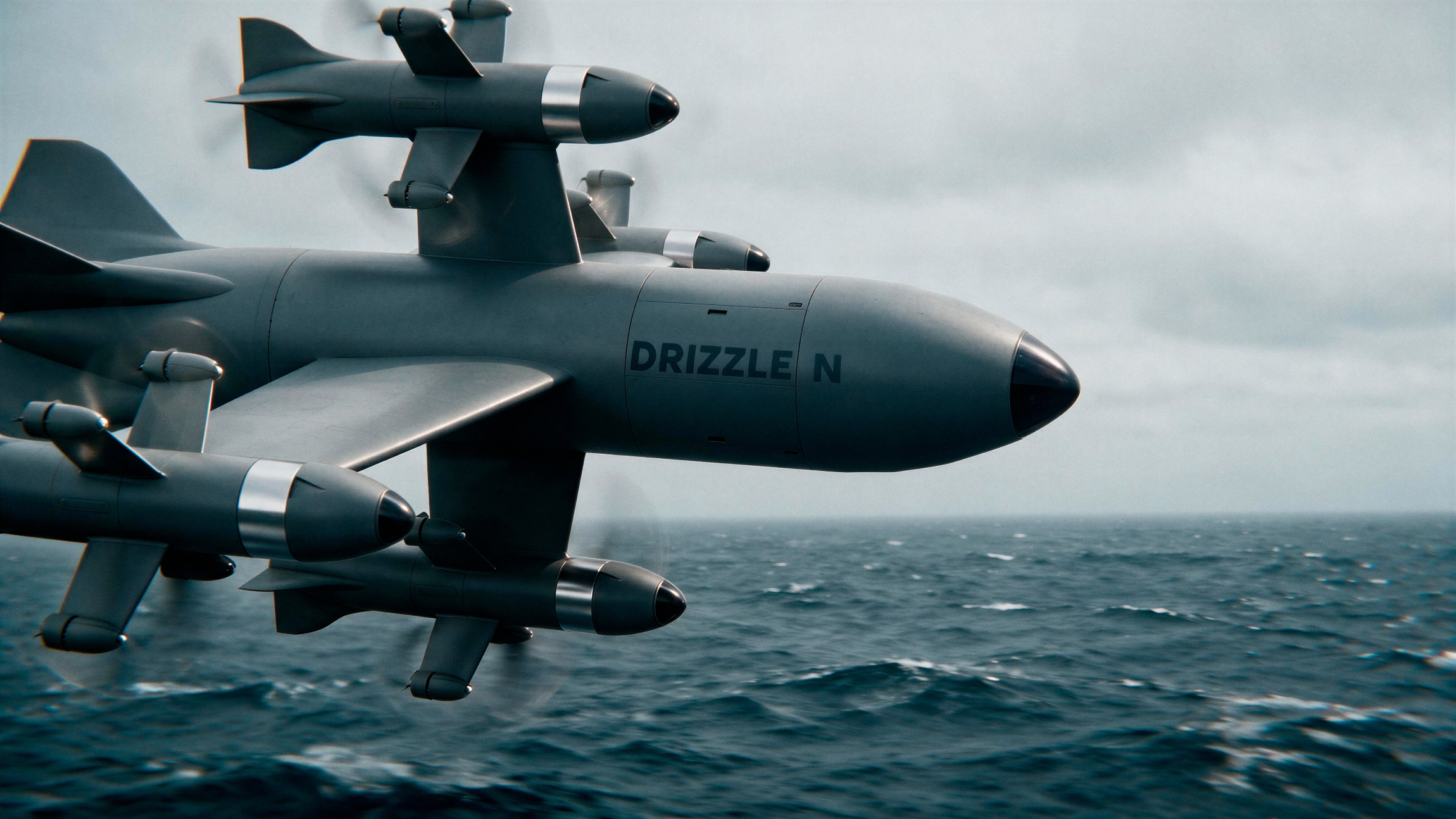
At the ninth 2E+I Army 35 Forum, held in Toledo, Indra is showcasing its new SQUALL cruise missile and DRIZZLE interceptor, two solutions that provide the Spanish Army with effective, cost-efficient and easily replaceable capabilities that can be deployed at scale to saturate adversary defences and erode its economy.
The company has accelerated all processes as much as possible to offer solutions that can be delivered with maximum speed.
The SQUALL system is the first Spanish-made cruise missile and has been designed to conduct long-range precision strikes at distances of more than 300 kilometres. With a maximum take-off weight of 150 kg, this 3.4-metre-long missile can carry a 60 kg warhead.
DRIZZLE is an 80-centimetre effector that flies at speeds of 400 kilometres per hour to engage other drones, light vehicles or antennas. It has a range of 80 kilometres, extendable to 130 with the support of a carrier drone. The carrier drone is itself an expendable system fitted with an explosive warhead and can also serve as a strike vector. The system can be integrated as a hard-kill solution within a counter-drone system, launched independently from the ground, or incorporated as a weapon on a drone or helicopter.
In addition to presenting these systems, the Toledo Forum serves as a showcase for several of the Spanish Armed Forces’ Special Modernisation Programmes in which the company is involved. These include the SANTAM programme for the supply of 147 Tarsis tactical drones, in fixed-wing and vertical take-off and landing (VTOL) versions; the ARACNE counter-drone system, which Indra is developing with EM&E; and the COAAAS Anti-Aircraft Artillery Operations system, which integrates the company’s active electronically scanned array (AESA) MTR radars.
All these solutions have been developed with a multidomain combat approach, enabling them to operate in an integrated manner as part of a system of systems with the aim of ensuring the Army’s operational superiority.
These new Indra systems and working processes incorporate lessons learned from conflicts such as the war in Ukraine and from missions such as the Eastern Flank Deterrence Initiative (EFDI), in which Spain has participated. They also respond to NATO requirements to accelerate development cycles as much as possible so that solutions can be delivered to armed forces more rapidly.
Regarding counter-drone warfare, Ángel Torrijo, Programme Manager in Indra’s Weapons & Ammunition division, will take part on the second day in a panel discussion on the subject, moderated by Brigadier General Manuel César Arienza, Commander of the Anti-Aircraft Artillery Command (MAAA). As for the VCR 8x8 Dragón, the centrepiece of the Army’s Force 35 transformation plan, Indra has consolidated the programme during the 18 months in which it has led TESS Defence and has more than doubled the number of vehicles delivered so far this year. The delivery of the 100th Dragón 8x8 vehicle this week coincides with the 2E+I Forum.